The Ref Stop

VAR issues at Anfield

Donate to RefChat

Help keep RefChat running, any donation would be appreciated

redref2005

New Member
VAR had trouble again in the game at Anfield yesterday.

Firstly Forest's goal was allowed when they had a player standing offside infront of the keeper. And then they had a goal disallowed due to a phantom hand ball that no-one else could see. I know they have a tough job of it but it feels like they are making random decisions currently no matter who is the VAR official.

 
The Ref Stop
May look the same as recently with the offside, but in fact they are different, though again open to interpretation - the first occasion was Robertson with a deliberate action and yesterday with the Forest goal, there was no deliberate action.
 
May look the same as recently with the offside, but in fact they are different, though again open to interpretation - the first occasion was Robertson with a deliberate action and yesterday with the Forest goal, there was no deliberate action.
Yes but surely it's worse as he was standing in front of the keeper whereas Robertson was standing to the side and couldn't affect the flight of the ball?
 
Yes but surely it's worse as he was standing in front of the keeper whereas Robertson was standing to the side and couldn't affect the flight of the ball?
Well all I can say is that ex striker Rooney and ex goalkeeper Green were the analysts on MOTD last night and both considered the goalkeeper was not affected.
 
The handball was given on field, and the replays I’ve seen were inconclusive. If the VAR sees the same as I did then On field call has to stand in this case.
 
The player was in the keepers vision. The player can only not be in the Keepers binocular vision if the Keeper shuts an eye.
 
The player was in the keepers vision. The player can only not be in the Keepers binocular vision if the Keeper shuts an eye.
He was in his vision, but he did not obstruct his vision. Key differential.
If we start using just in his vision, given how wide our peripheral vision is then we'd be calling a lot more offside offences.
 
He was in his vision, but he did not obstruct his vision. Key differential.
If we start using just in his vision, given how wide our peripheral vision is then we'd be calling a lot more offside offences.

Then vision is restricted. Vision goes beyond primary focus. Binocular vison is not the same as peripheral vision. Peripheral vision isn't wide.
 
Then vision is restricted. Vision goes beyond primary focus. Binocular vison is not the same as peripheral vision. Peripheral vision isn't wide.
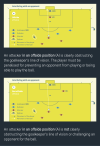
Screenshot_20251125-154322.png

The keeper had full vision of the ball for the whole time. His vision was not clearly obstructed.
 
View attachment 8454

The keeper had full vision of the ball for the whole time. His vision was not clearly obstructed.

If an obstacle is in the keepers binocular vision the keeper cannot have full vision. This is not how vision and the brain works. If a obstacle is in your binocular visions path, an effect is that your brain will consider its existence. In normal circumstances the brain filters out what it consider to be irrelevant, however on a football field a opponent in the keepers vision (binocular vision) will have an effect because the brain has been trained to recognise the relevant patterns of what occurs on a football pitch, a player will not unsee what is there in front of him.
 
If an obstacle is in the keepers binocular vision the keeper cannot have full vision. This is not how vision and the brain works. If a obstacle is in your binocular visions path, an effect is that your brain will consider its existence. In normal circumstances the brain filters out what it consider to be irrelevant, however on a football field a opponent in the keepers vision (binocular vision) will have an effect because the brain has been trained to recognise the relevant patterns of what occurs on a football pitch, a player will not unsee what is there in front of him.
Suggests you write to ifab to ensure that this is incorporated into the laws of the game. Until then, this is not an offside offence, as per the written laws and the accompanying guidance within the laws
 
  • Like
Reactions: one
If an obstacle is in the keepers binocular vision the keeper cannot have full vision. This is not how vision and the brain works. If a obstacle is in your binocular visions path, an effect is that your brain will consider its existence. In normal circumstances the brain filters out what it consider to be irrelevant, however on a football field a opponent in the keepers vision (binocular vision) will have an effect because the brain has been trained to recognise the relevant patterns of what occurs on a football pitch, a player will not unsee what is there in front of him.
And to think they didn't quote binocular vision in LOTG. Madness.
 
And to think they didn't quote binocular vision in LOTG. Madness.

It was a point about visons function. On a football pitch if a player is in the Keepers vision the player does not turn into Casper the ghost, the brain will react because the player is there.

And if peripheral vision was wide .. We wouldn't have to turn our heads, you would be seeing backwards .. Mad.
 
If an obstacle is in the keepers binocular vision the keeper cannot have full vision. This is not how vision and the brain works. If a obstacle is in your binocular visions path, an effect is that your brain will consider its existence. In normal circumstances the brain filters out what it consider to be irrelevant, however on a football field a opponent in the keepers vision (binocular vision) will have an effect because the brain has been trained to recognise the relevant patterns of what occurs on a football pitch, a player will not unsee what is there in front of him.
It might not be how vision and the brain works, but it is how the law works and that is all the match officials can work to.
 
Back
Top