

You are using an out of date browser. It may not display this or other websites correctly.
You should upgrade or use an alternative browser.
You should upgrade or use an alternative browser.
Are Match Fees Taxable?
- Thread starter lalec03
- Start date


Here we go... usually an opinion splitter
You are allowed to receive up to £1000 additional income before being legally required to declare it to HMRC.
This is the total amount received before you deduct any expenses (mileage etc..).
That's the legal line. Many referees don't declare it for whatever reasons and that is their choice.
Here's my source:
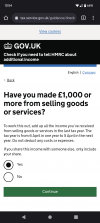
When you answer yes, the next screen says:
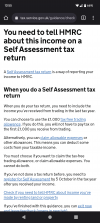
You are allowed to receive up to £1000 additional income before being legally required to declare it to HMRC.
This is the total amount received before you deduct any expenses (mileage etc..).
That's the legal line. Many referees don't declare it for whatever reasons and that is their choice.
Here's my source:
When you answer yes, the next screen says:
Thanks for the response, is that £1,000 per month or per annum?Here we go... usually an opinion splitter
You are allowed to receive up to £1000 additional income before being legally required to declare it to HMRC.
This is the total amount received before you deduct any expenses (mileage etc..).
That's the legal line. Many referees don't declare it for whatever reasons and that is their choice.
I've added to my post. You'll see it's per annum, between the financial year 6April-5AprilThanks for the response, is that £1,000 per month or per annum?
socal lurker
RefChat Addict
That 1.000 is a nice de minimis standard. In the US, there is no such cushion--all fees are reportable as taxable income.
Excellent, thanks very much. Does this include small sided football that is not FA affiliated?I've added to my post. You'll see it's per annum, between the financial year 6April-5April

That's because you Yanks are all on pop-star wages ...That 1.000 is a nice de minimis standard. In the US, there is no such cushion--all fees are reportable as taxable income.


You get £1000 for "property" and £1000 for "trading". https://www.gov.uk/guidance/tax-free-allowances-on-property-and-trading-incomeExcellent, thanks very much. Does this include small sided football that is not FA affiliated?
Any form of football payments will come under the "trading" header, so will need to be added up, along with anything else you do that might earn you money. So in theory, you could (for example) get paid for being a ref, a football coach, for running a small gardening service and for selling upcycled furniture on ebay - all 4 incomes would need to be added up and determined if they are above £1000 in total. And if so, you would need to sign up to self assessment.
So to specifically answer your question: yes. It doesn't matter where the money comes from specifically, if it can be described as "Trading" then it need to go towards that total.
Seriously??Excellent, thanks very much. Does this include small sided football that is not FA affiliated?

Mate, tax is related to income, end of.
It makes not a blind bit of difference what kind of football you do ... !!

mctones
Member
[UK only. This does not constitute financial advice and is my opinion only. Right, that's the disclaimers out the way!]
To be absolutely clear that is not just £1,000 or above on football income, it applies to ALL income outside of PAYE you may bring in, you don't get £1,000 for refereeing, £1000 for buying and selling on ebay, £1000 for selling art and crafts etc.
If you earn over £1000 then you will need to register as a sole trader with HMRC and undertake Self Assessment each year. Record all your legitimate expenses associated with your refereeing, for example matchday and training kit, subsistence such as water or sports drink, 45p/mile if that is not provided to you etc. When you submit your return to HMRC, you can deduct the total of all those expenses from your income. HMRC do not require the individual items (unless you bring in more than £85,000, unlikely!).
Note there is a £1000 trading allowance, so if expenses are LESS than £1000, you can deduct the trading allowance instead of expenses. Worked example:
Example one.
Income £1,500
Expenses: £350
operating profit: £1,150
HMRC profit: £1,500 income - £1000 trading allowance = £500 taxable profit
So you will be taxed on the £500, the amount of tax will depend on other PAYE income and tax burdens you might have.
Example two.
Income £3,500
Expenses: £1,200
operating profit: £2,300
HMRC profit: £3,500 income - £1,200 expenses = £2,300 taxable profit
I would personally sign up to a fee free business bank account like mettle.co.uk from Natwest, which also comes with free access to sole trader accounting software freeagent. When you get your match fees, pay them into your business bank account, keep it all separate from your personal bank account, and record all income and expenditure in freeagent. Other bank accounts and accountancy software providers are available.
As the sole trader you can draw money out of that bank account to buy yourself whatever you want for personal use, in accountancy this is known as an owner drawing. Just make sure you leave enough in the bank for your tax bill. The amount of tax could range from 0-40%, so as a general rule of thumb I am retaining 50% of everything earnt over £1000 to cover any potential bill just to be safe.
Cheers, Tony
To be absolutely clear that is not just £1,000 or above on football income, it applies to ALL income outside of PAYE you may bring in, you don't get £1,000 for refereeing, £1000 for buying and selling on ebay, £1000 for selling art and crafts etc.
If you earn over £1000 then you will need to register as a sole trader with HMRC and undertake Self Assessment each year. Record all your legitimate expenses associated with your refereeing, for example matchday and training kit, subsistence such as water or sports drink, 45p/mile if that is not provided to you etc. When you submit your return to HMRC, you can deduct the total of all those expenses from your income. HMRC do not require the individual items (unless you bring in more than £85,000, unlikely!).
Note there is a £1000 trading allowance, so if expenses are LESS than £1000, you can deduct the trading allowance instead of expenses. Worked example:
Example one.
Income £1,500
Expenses: £350
operating profit: £1,150
HMRC profit: £1,500 income - £1000 trading allowance = £500 taxable profit
So you will be taxed on the £500, the amount of tax will depend on other PAYE income and tax burdens you might have.
Example two.
Income £3,500
Expenses: £1,200
operating profit: £2,300
HMRC profit: £3,500 income - £1,200 expenses = £2,300 taxable profit
I would personally sign up to a fee free business bank account like mettle.co.uk from Natwest, which also comes with free access to sole trader accounting software freeagent. When you get your match fees, pay them into your business bank account, keep it all separate from your personal bank account, and record all income and expenditure in freeagent. Other bank accounts and accountancy software providers are available.
As the sole trader you can draw money out of that bank account to buy yourself whatever you want for personal use, in accountancy this is known as an owner drawing. Just make sure you leave enough in the bank for your tax bill. The amount of tax could range from 0-40%, so as a general rule of thumb I am retaining 50% of everything earnt over £1000 to cover any potential bill just to be safe.
Cheers, Tony
I pay my tax through my PAYE tax code so I don't have a physical bill to pay.[UK only. This does not constitute financial advice and is my opinion only. Right, that's the disclaimers out the way!]
To be absolutely clear that is not just £1,000 or above on football income, it applies to ALL income outside of PAYE you may bring in, you don't get £1,000 for refereeing, £1000 for buying and selling on ebay, £1000 for selling art and crafts etc.
If you earn over £1000 then you will need to register as a sole trader with HMRC and undertake Self Assessment each year. Record all your legitimate expenses associated with your refereeing, for example matchday and training kit, subsistence such as water or sports drink, 45p/mile if that is not provided to you etc. When you submit your return to HMRC, you can deduct the total of all those expenses from your income. HMRC do not require the individual items (unless you bring in more than £85,000, unlikely!).
Note there is a £1000 trading allowance, so if expenses are LESS than £1000, you can deduct the trading allowance instead of expenses. Worked example:
Example one.
Income £1,500
Expenses: £350
operating profit: £1,150
HMRC profit: £1,500 income - £1000 trading allowance = £500 taxable profit
So you will be taxed on the £500, the amount of tax will depend on other PAYE income and tax burdens you might have.
Example two.
Income £3,500
Expenses: £1,200
operating profit: £2,300
HMRC profit: £3,500 income - £1,200 expenses = £2,300 taxable profit
I would personally sign up to a fee free business bank account like mettle.co.uk from Natwest, which also comes with free access to sole trader accounting software freeagent. When you get your match fees, pay them into your business bank account, keep it all separate from your personal bank account, and record all income and expenditure in freeagent. Other bank accounts and accountancy software providers are available.
As the sole trader you can draw money out of that bank account to buy yourself whatever you want for personal use, in accountancy this is known as an owner drawing. Just make sure you leave enough in the bank for your tax bill. The amount of tax could range from 0-40%, so as a general rule of thumb I am retaining 50% of everything earnt over £1000 to cover any potential bill just to be safe.
Cheers, Tony
 but a good explanation. I might have to look back at a couple of years as I might have paid more tax than I needed to. Probably not as I reckon my expenses have cleared 1000 in most years but worth a look methinks.
mctones
Member
Yes good point sorry, if you are on PAYE you can opt to have it recovered through your main employer rather than a lump sum.I pay my tax through my PAYE tax code so I don't have a physical bill to pay.
The trading allowance is a relatively new thing and I think was brought in to offer a bit of fairness - compare someone earning £999 paying zero tax with someone earning £1 more and they could end up paying 40% of it all back on tax. Now with trading allowance it is essentially treating everyone more fairly with a progressive tax approach, it is making sure you are keeping closer to £1000 of income just as someone earning £999 will.
Last edited:

I was about to ask how all of you are getting beyond 1000 so easily but then remembered my match fee is about half what it used to be when I did men's football

L4s here are getting 70 a pop so it only takes 15 games to get there. Easily done over a season.I was about to ask how all of you are getting beyond 1000 so easily but then remembered my match fee is about half what it used to be when I did men's football
Meanwhile at womens grassroots it’s 20/25L4s here are getting 70 a pop so it only takes 15 games to get there. Easily done over a season.
 I’d be impressed to get to 1000!